Listeners:
Top listeners:
-
 play_arrow
LISTEN TO CJMQ 88.9FM CJMQ 88.9FM
-
play_arrow
CJMQ 2 CLASSIC TOP 40
-
 play_arrow
Spinning Stories Episode 5: Legendary Beats with John Digweed
-
 play_arrow
Tuning into the Future as École Vision Sherbrooke Raises the Next Generation of Broadcasters Derek Bullard
-
play_arrow
Tuning into the Future as École Vision Sherbrooke Raises the Next Generation of Broadcasters Derek Bullard
-
play_arrow
Tuning into the Future as École Vision Sherbrooke Raises the Next Generation of Broadcasters Derek Bullard
-
play_arrow
Tuning into the Future as École Vision Sherbrooke Raises the Next Generation of Broadcasters Derek Bullard

Estrie Faces Rising Tick Populations and New Tick-Borne Diseases as Climate Conditions Shift
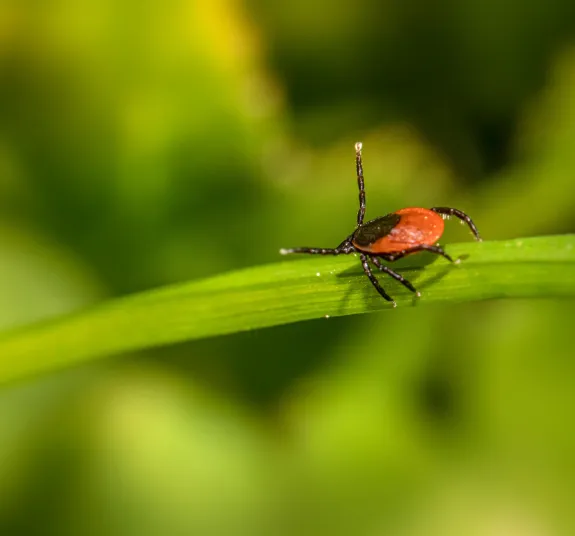
Estrie, June 19 2026 — Public health officials are continuing to monitor tick activity across the Estrie region as Lyme disease and other tick-borne illnesses remain a growing concern for residents spending time outdoors this summer.
Dr. Kelly Mirabel, a specialist in medical microbiology and infectious diseases, says the overall trend in recent years has been an increase in both tick populations and reported cases of Lyme disease. Health experts are also tracking the emergence of other diseases carried by ticks, including anaplasmosis and babesiosis, which have been identified in the region in recent years.
According to Mirabel, warmer temperatures and changing environmental conditions have contributed to the expansion of tick habitats across southern Quebec. Ticks are most commonly found in wooded areas, tall grass, and locations where residential development borders natural spaces. Symptoms of tick-borne illnesses can vary but often include fever, fatigue, muscle aches, and other flu-like symptoms.
Health professionals encourage residents to remain vigilant, particularly during the spring and summer months when tick activity is highest. To reduce the risk of infection, residents are advised to perform tick checks after outdoor activities, use insect repellents, and remove attached ticks as quickly as possible.
For reliable information on tick activity, prevention measures, and public health recommendations, residents can visit the Institut national de santé publique du Québec (INSPQ), which provides regularly updated resources on Lyme disease and other tick-borne illnesses in Quebec.
Listen here:
-
 play_arrow
Estrie Faces Rising Tick Populations and New Tick-Borne Diseases as Climate Conditions Shift Joshua Bullard
Sign up to our newsletter


Top popular

Rock Forest Will Welcome New Commercial Hub with Super C

Homicide Investigation: Public Assistance Needed in the Case of Alan Kruja

Gaiters Win Wild 3-OT Loney Bowl; Claim First AUS Championship

Invasive freshwater jellyfish discovered in Eastern Townships lakes

Local DJs Plans First Music Festival Near Quebec City – ONE FESTIVAL

Post comments (0)