Listeners:
Top listeners:
-
 play_arrow
LISTEN TO CJMQ 88.9FM CJMQ 88.9FM
-
play_arrow
CJMQ 2 CLASSIC TOP 40
-
 play_arrow
Spinning Stories Episode 5: Legendary Beats with John Digweed
-
 play_arrow
Patterson outlines priorities as Brome Lake’s new mayor William Crooks
-
play_arrow
Patterson outlines priorities as Brome Lake’s new mayor William Crooks

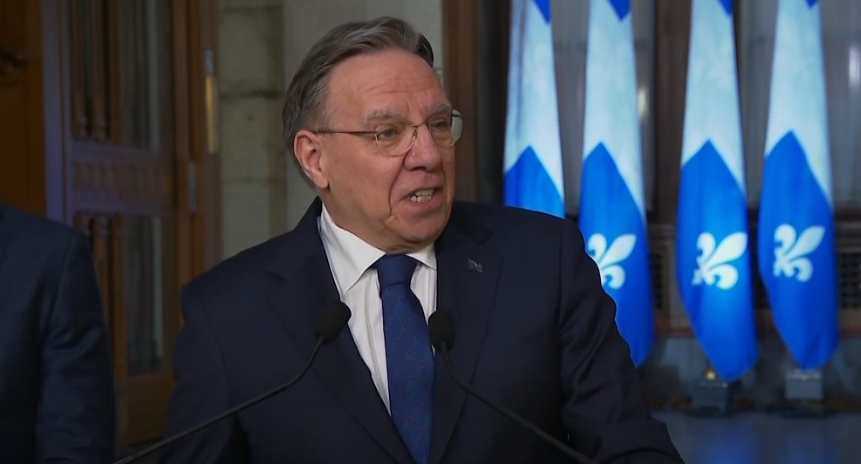
After Legault: why the CAQ reset may come too late
-
 play_arrow
After Legault: why the CAQ reset may come too late William Crooks
In this interview, Bishop’s University associate professor of politics Jacob Robbins-Kanter offers detailed analysis following Quebec Premier François Legault’s announcement that he will resign and remain in office until a successor is chosen. Speaking shortly after the news broke, Robbins-Kanter situates the decision within the broader context of late-stage governments, declining public trust, and the strategic limits facing long-governing parties.
Robbins-Kanter argues that Legault waited until the final possible moment to step aside, holding out hope that opinion polls might still shift in his favour. When that reversal failed to materialize, resignation became unavoidable. While the move opens a narrow opportunity for the Coalition Avenir Québec to distance itself from Legault personally, Robbins-Kanter explains why that reset will be difficult, particularly if the party selects a new leader from within the current cabinet.
The interview also explores why CAQ MNAs have been largely silent in the immediate aftermath, how opposition parties are likely to respond, and why rivals may actually have preferred Legault to remain as leader through the campaign. Robbins-Kanter assesses whether the CAQ can realistically recover ground before the election and outlines why voter fatigue with late-stage governments is often decisive.
Finally, the conversation examines similarities and differences between the CAQ and the Parti Québécois, including contrasts on sovereignty, economic orientation, and leadership-driven party identity. Robbins-Kanter also reflects on Legault’s mixed legacy, noting both praise for his leadership during the pandemic and criticism tied to health care, education, and ongoing controversies.
Sign up to our newsletter


Top popular

Sherbrooke’s Rosalie Tremblay Joins Team Canada U18 Roster

Rock Forest Will Welcome New Commercial Hub with Super C

Gaiters Win Wild 3-OT Loney Bowl; Claim First AUS Championship

Invasive freshwater jellyfish discovered in Eastern Townships lakes

Homicide Investigation: Public Assistance Needed in the Case of Alan Kruja

Post comments (0)